A South Australian research and industry collaboration is advancing next-generation navigation technology for GPS-denied and contested environments, positioning the state at the forefront of ultra-precise sensing capability for defence, space and undersea applications.
Researchers from Adelaide University’s Institute for Photonics and Advanced Sensing (IPAS), partnering with Northrop Grumman Australia and South Australian-based company Norseld, have successfully received further federal government funding to accelerate the development of hollow-core optical fibre technology to improve navigation in isolated and extreme environments.
The project, Hollow-core optical fibres for next-generation optical gyroscopes, received over $499,000 through Round 2 of Australia’s Economic Accelerator (AEA) Ignite program.
The follow-on funding will build on a previous successful proof-of-concept project, backed by a Defence Trailblazer grant.
While traditional optical fibres guide light in glass, hollow-core fibres guide light through a thin channel of air. This makes the signal immune to the interference, thermal instability, and radiation damage that affect standard glass fibres and results in a sensor capable of ultra-high precision navigation in deep oceans, space or combat zones where GPS is unavailable or jammed.
This new funding will de-risk the hollow-core optical fibre technology, transitioning from a research concept towards a manufacturing-ready product.
Further, it will assist in developing a clear pathway for manufacturing – a significant win for Australia’s sovereign industrial capability.
Adelaide University researcher Dr Erik Schartner said standard navigation sensors are reaching their physical limits because light travelling through glass is highly sensitive to temperature shifts and radiation.
“By guiding light through air, we bypass those constraints,” Dr Schartner said. “And by partnering with Northrop Grumman and South Australian company Norseld, we’re working to build sovereign capability in this emerging field.”
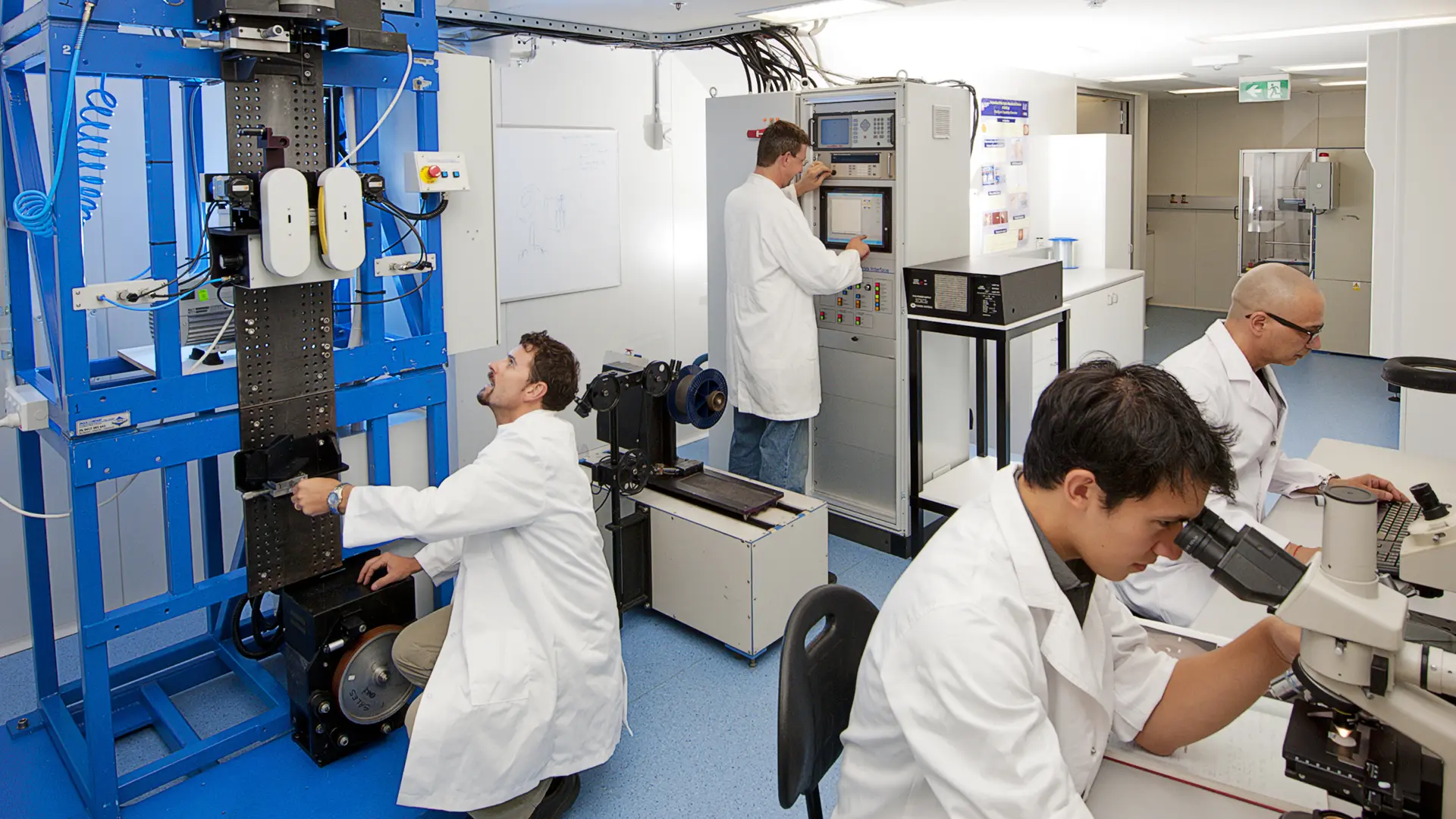
The IPAS team will utilise the specialised capabilities of the NCRIS-funded Australian National Fabrication Facility (ANFF) Optofab Adelaide Node, which will provide the advanced glass and fibre fabrication infrastructure and support to enable manufacturing and testing for the project.
Ignite grants support early-stage research commercialisation of projects that commence at Technology Readiness Level (TRL) 3, 4 or 5 through competitive grants of up to $500,000 for 12 months.
Applications for Round 3 of the AEA Ignite Program are now open. Find out more here.
—
Image: At the ANFF Optofab Adelaide Silica Fibre Drawing Facility, featuring the 6-metre fibre drawing tower central to this project. (Supplied)