Long-range fires and hypersonic weapons, undersea warfare and artificial intelligence are among six capability priorities identified in the newly launched, decade-long Defence Innovation, Science and Technology Strategy.
Deputy Prime Minister and Defence Minister Richard Marles launched the strategy in Adelaide this week while attending the 2026 ADSTAR Summit, which brought together more than 2000 delegates from across Australia and around the world.
The strategy outlines a pathway to accelerate innovation, deliver future capability for Defence and strengthen Australia’s sovereign industrial base.
It’s priority areas align with South Australia’s established strengths in defence research, development and advanced technology. The state’s industry, universities and research organisations are contributing expertise across priority areas including undersea warfare, autonomous systems, quantum technologies and advanced capabilities supporting long-range strike.
The 2026 Defence Innovation, Science and Technology Strategy identifies six key capability priorities:
- long-range fires and hypersonic weapons
- high-energy lasers
- autonomous systems
- quantum technology
- artificial intelligence
- undersea warfare
These priority areas will support the development of future Defence capabilities and autonomous platforms including the Ghost Bat uncrewed aircraft and Ghost Shark autonomous undersea vehicle.
They will also support emerging technologies such as quantum systems that provide secure navigation and timing in GPS-denied environments, as well as advanced systems to counter drones and protect Defence personnel and infrastructure.
Launching the strategy, Deputy Prime Minister and Defence Minister Richard Marles said rapid advances in technology were reshaping warfare and reinforcing the need for Defence, industry and researchers to work together to accelerate innovation.
“The Defence Innovation, Science and Technology Strategy sets clear direction for Defence, industry, academics and researchers to work together on the technologies that will define the future of modern warfare.”
Described as a 10-year blueprint, the strategy is designed to accelerate the delivery of innovative solutions and new technologies for Defence while strengthening Australia’s sovereign industrial base.
Chief of the Defence Force, Admiral Mark Hammond, said the strategy would help transition new technologies to Defence more quickly through stronger partnerships with industry, academia and international allies, and a greater emphasis on rapid experimentation.
“The new Defence Innovation, Science and Technology Strategy offers a blueprint for providing the capability our warfighters need,” Admiral Hammond said.
The 2026 IS&T strategy aligns with the 2026 National Defence Strategy and will strengthen partnerships to accelerate innovation, build sovereign capability and contribute to the peace and security of the region.
Defence is also working with trusted international partners to expand collaboration across areas of innovation, science and technology.
South Australia welcomed the opportunity to host the 2026 ADSTAR Summit, showcasing the depth of the state’s defence research, development and innovation capability to a national and international audience.
Through the Defence Innovation Partnership and the South Australia – The Defence State stand, the summit highlighted the collaboration between Defence, industry, universities and research organisations that is advancing innovation across priority areas including undersea warfare, autonomous systems and quantum technologies.
The event reinforced South Australia’s position as a nationally significant defence innovation hub, connecting researchers, industry leaders and Defence stakeholders to help deliver the next generation of Defence capability.
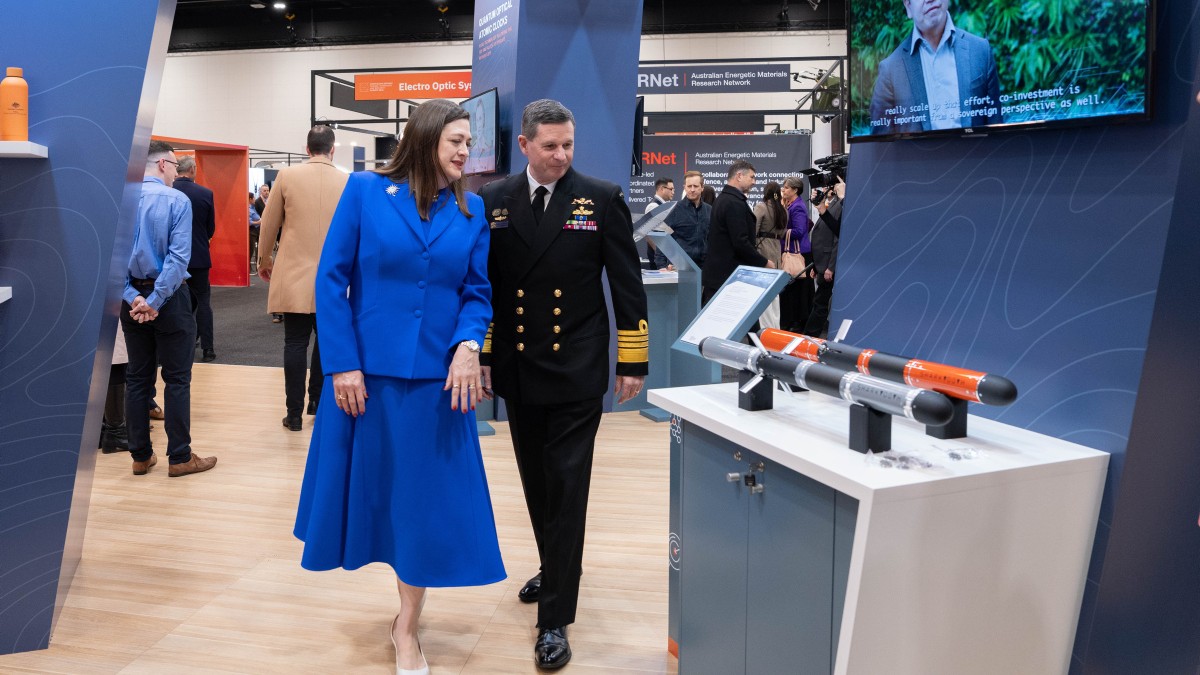
Photo: Chief Defence Scientist Professor Tanya Monro and Chief of the Defence Force, Admiral Mark Hammond at ADSTAR 2026 in Adelaide ahead of the Defence Innovation, Science and Technology Strategy launch. Photo credit: Department of Defence